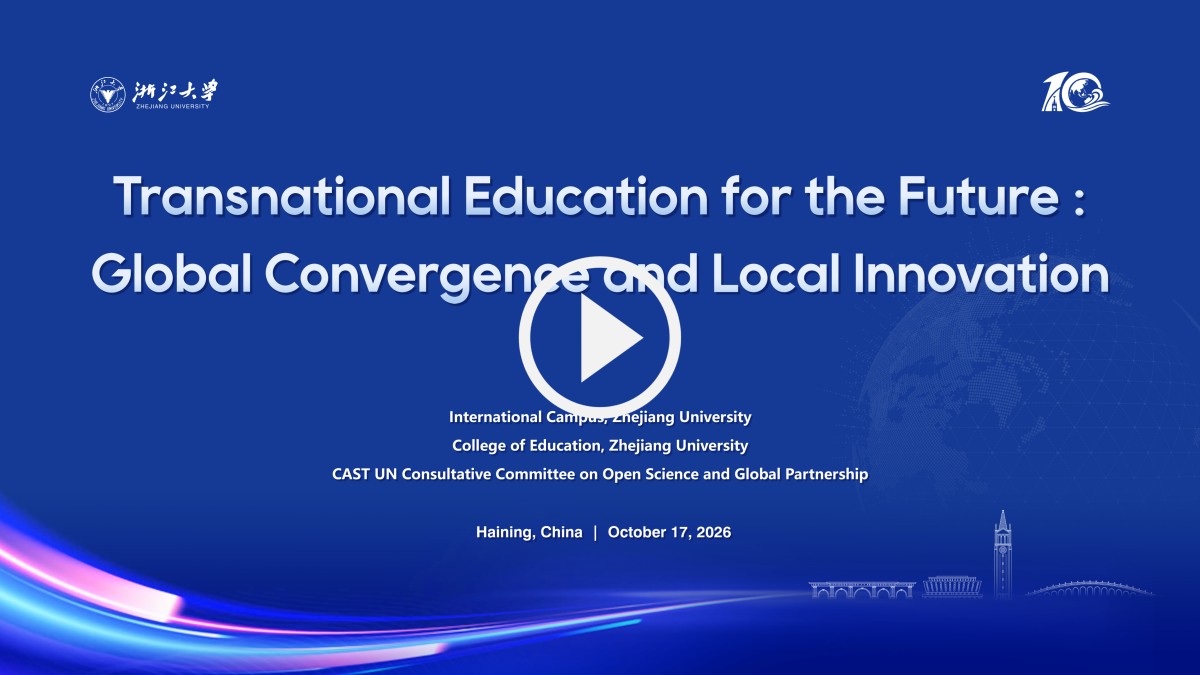
On October 17, the Forum on the Future of Transnational Education and the Third International Symposium on Higher Education was held at Zhejiang University International Campus. As part of the iZJU convention on quality and sustainable development, the forum was themed “Transnational Education for the Future: Global Convergence and Local Innovation.”

Zhejiang University President Yanming Ma met with university leaders and distinguished scholars from overseas who attended the forum. Extending a warm welcome to the guests, he introduced the university’s development and highlighted its commitment to international exchange and cooperation. He noted that, as a strategic platform for advancing transnational education at International Campus, Zhejiang University had spent the past decade expanding its network of international educational partnerships and exploring new models of transnational education talent development, achieving positive results. As Zhejiang University advances its global engagement strategy, Ma expressed the hope that the forum would provide an opportunity to deepen exchanges and cooperation, build innovative, inclusive and sustainable partnerships, and contribute collectively to the development of higher education worldwide.

Hui Zhu, Vice Chair of the Zhejiang University Council, attended the opening ceremony and delivered remarks. She observed that, amid profound transformations driven by AI and shifts in the global landscape, the value of university cooperation increasingly lies in areas that technology cannot replace: face-to-face understanding, cross-cultural trust, and the shared experience of solving problems together. Looking ahead, she said, universities should turn signed agreements into genuine collaboration, and turn internationalization at home from concept into practice. She also expressed the hope that more young people would broaden their horizons through transnational education and help build bridges between civilizations.
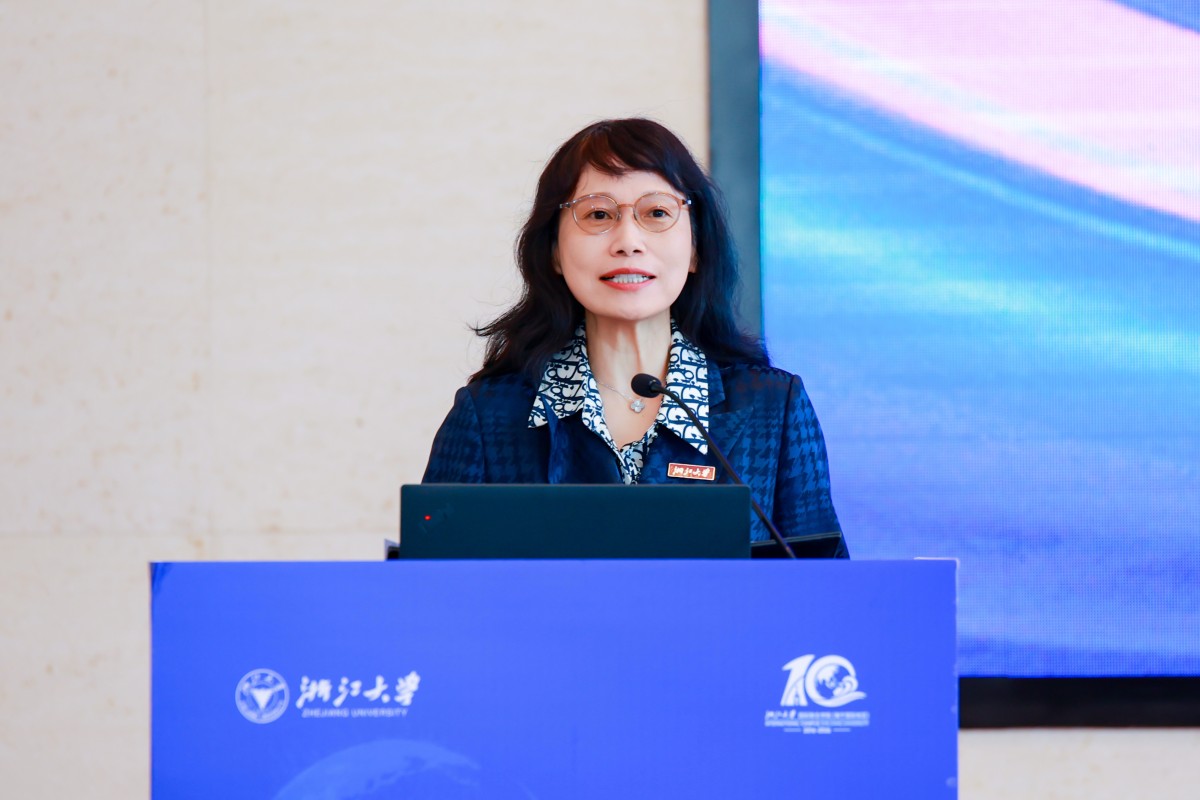
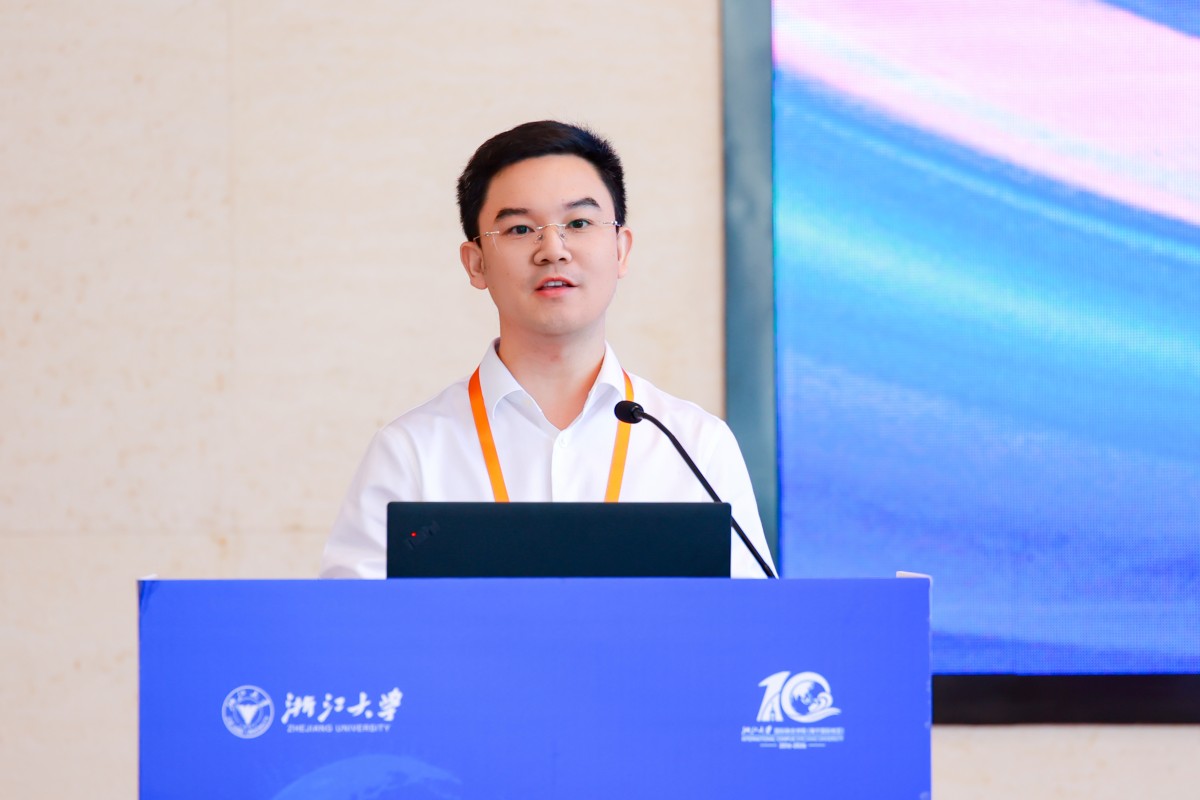
Lin Shao, Member of the Standing Committee of Haining Municipal Party Committee and Director of Haining Organization Department, noted that over the past decade, the International Campus had given strong impetus to talent attraction, industrial upgrading and improvements in the quality of urban life in Haining, demonstrating how universities and cities can thrive together. He said, Haining would continue to work closely with Zhejiang University and use the university’s internationalization to drive our city’s global transformation.
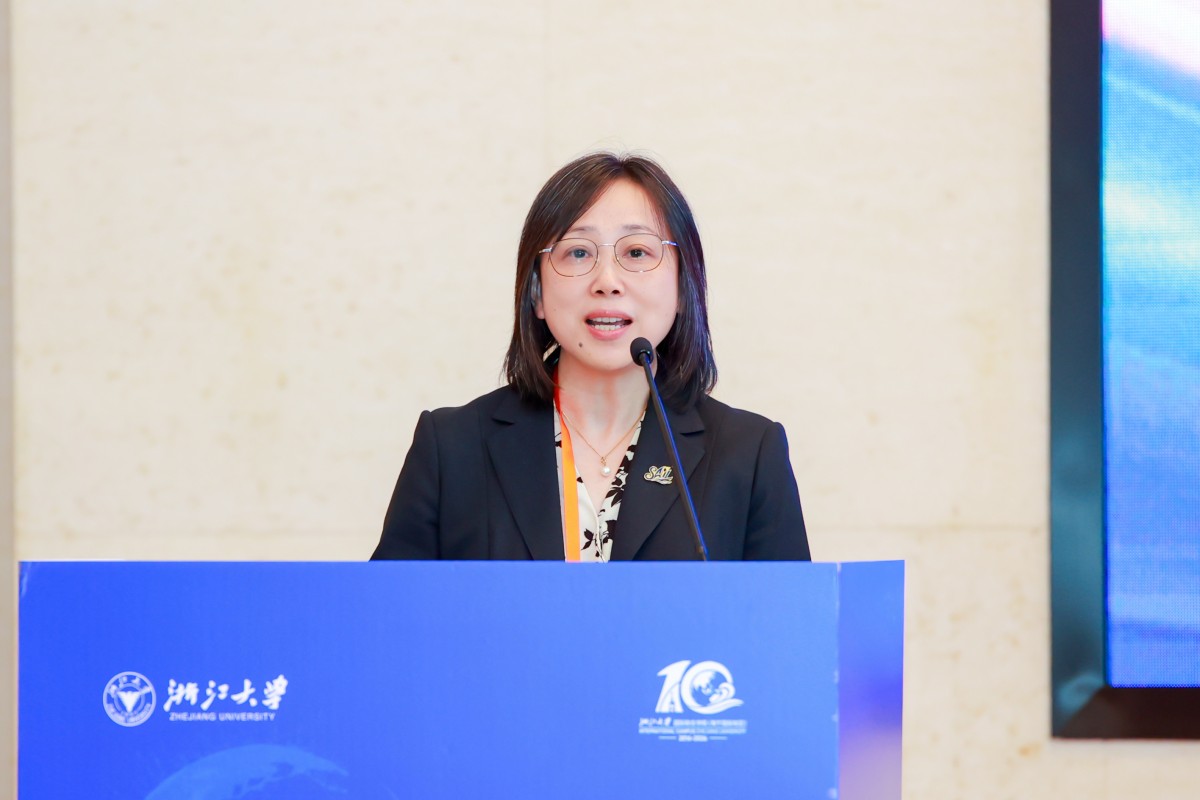
Min Li, Chief and Vice Dean of International Campus, delivered a presentation titled “Crossing Borders, Co-creating the Future: Reflections on the Development of ZJU International Campus.” Reflecting on the campus’s first decade, she identified match, trust and accommodation as three key lessons: choosing the right partners, building joint governance, and turning differences into synergy. Looking ahead, she said the campus would be guided by its SAIL vision: sustainable, accountable, international, and leading, to deepen sustainable partnerships and support the development of innovative talent.
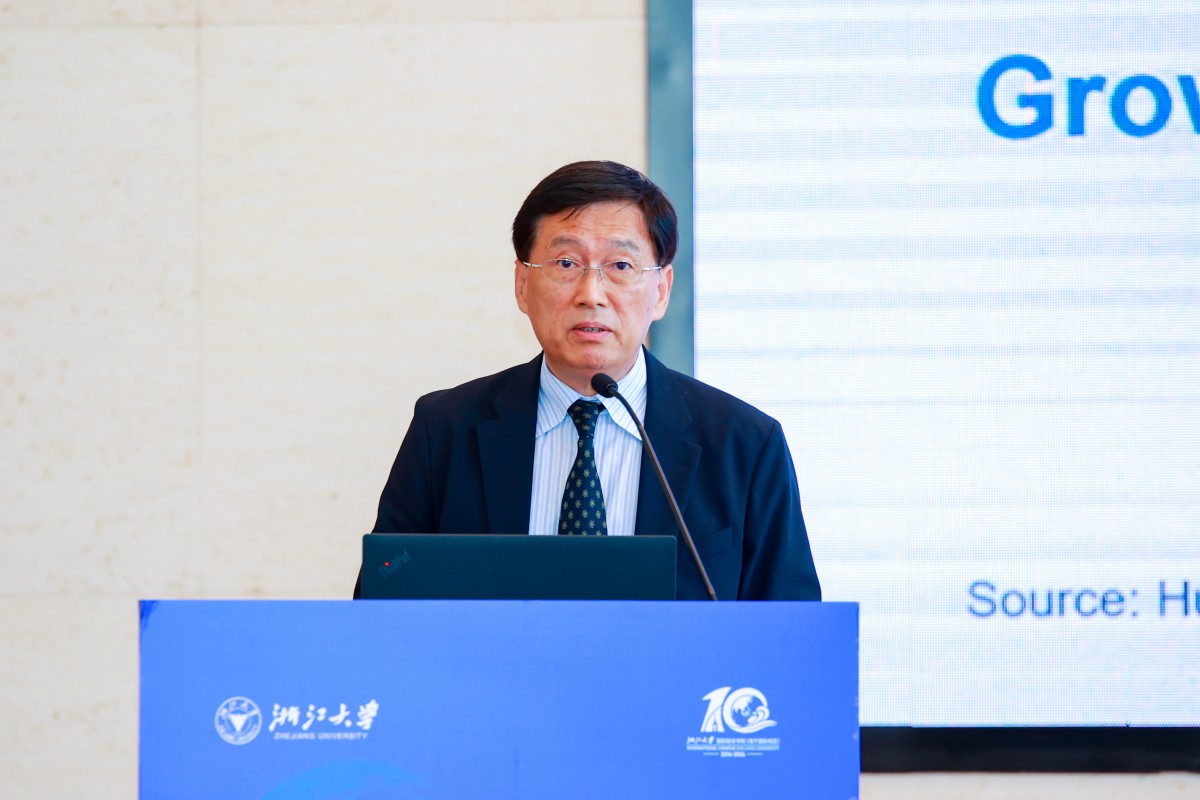
Futao Huang, Vice Director of the Research Institute for Higher Education and a professor at Hiroshima University, delivered a keynote report. Drawing on examples of transnational education higher education initiatives in several countries, he argued that transnational education should move beyond an overriding focus on expansion and instead prioritize student learning outcomes and local capacity-building. He also called for stronger mechanisms to safeguard educational initiatives against external changes, ensuring that international cooperation delivers sustainable educational outcomes.
Joan Guàrdia Olmos, Rector of the University of Barcelona; Song Yonghua, Rector of the University of Macau; Jeffrey S. Lehman, Vice Chancellor of NYU Shanghai; David Argyle, Vice Principal of the University of Edinburgh; Rishen Shekhar, Pro Vice-Chancellor of the Australian National University; and Hongwei Wang, Vice Dean of International Campus, shared their insights in a panel discussion on “The Future of Transnational Education in a Shifting World.”
Guests noted that a lack of mutual understanding and empathy can pose challenges to international engagement. Universities, they emphasized, should serve as bridges across divides, with transnational education offering an effective way to address this challenge.

The opening ceremony was chaired by Yingcai Wu, Executive Vice Dean of International Campus and Dean of ZJUI.
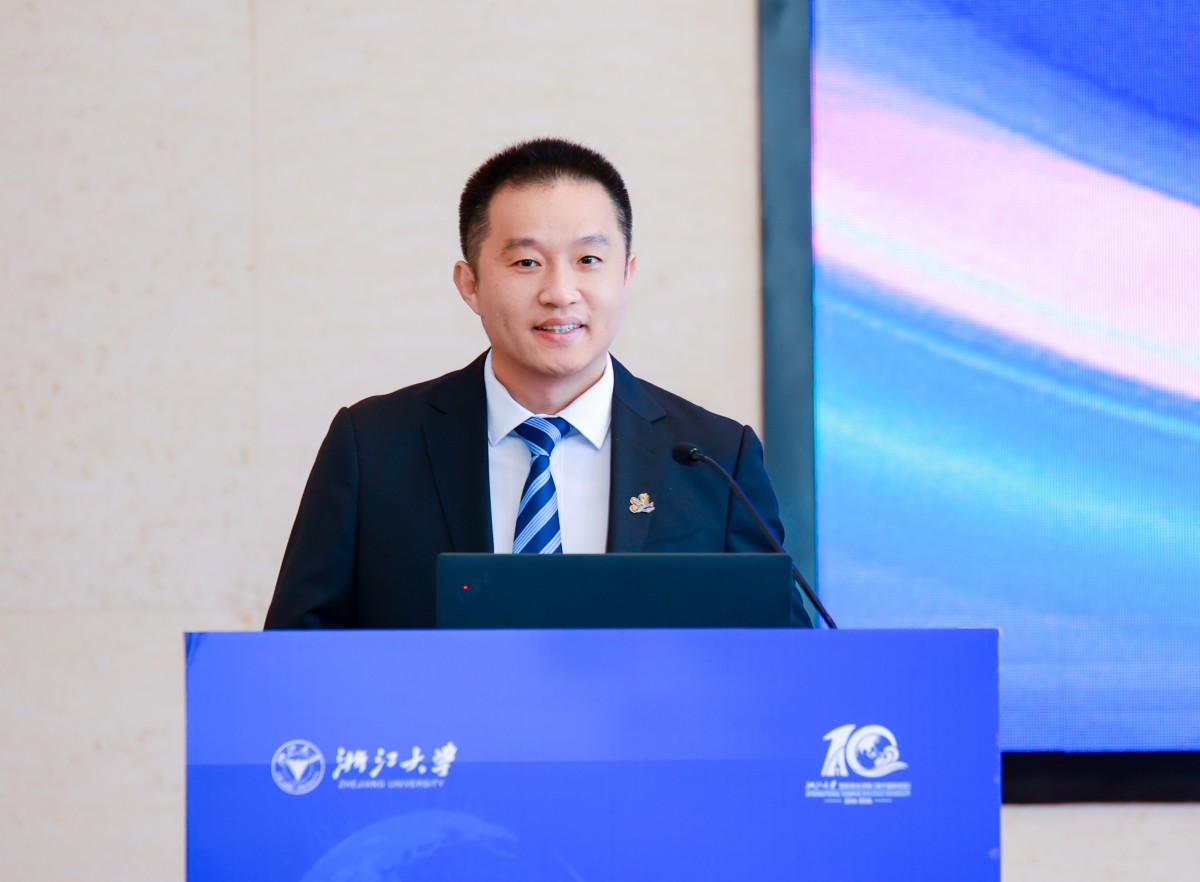
The forum featured three parallel sessions.
The first, titled “Partnerships Redefined: From Institutional Agreements to Collaborative Ecosystems,” explored how universities and their partners could move beyond formal agreements to create shared value by connecting research with industry.
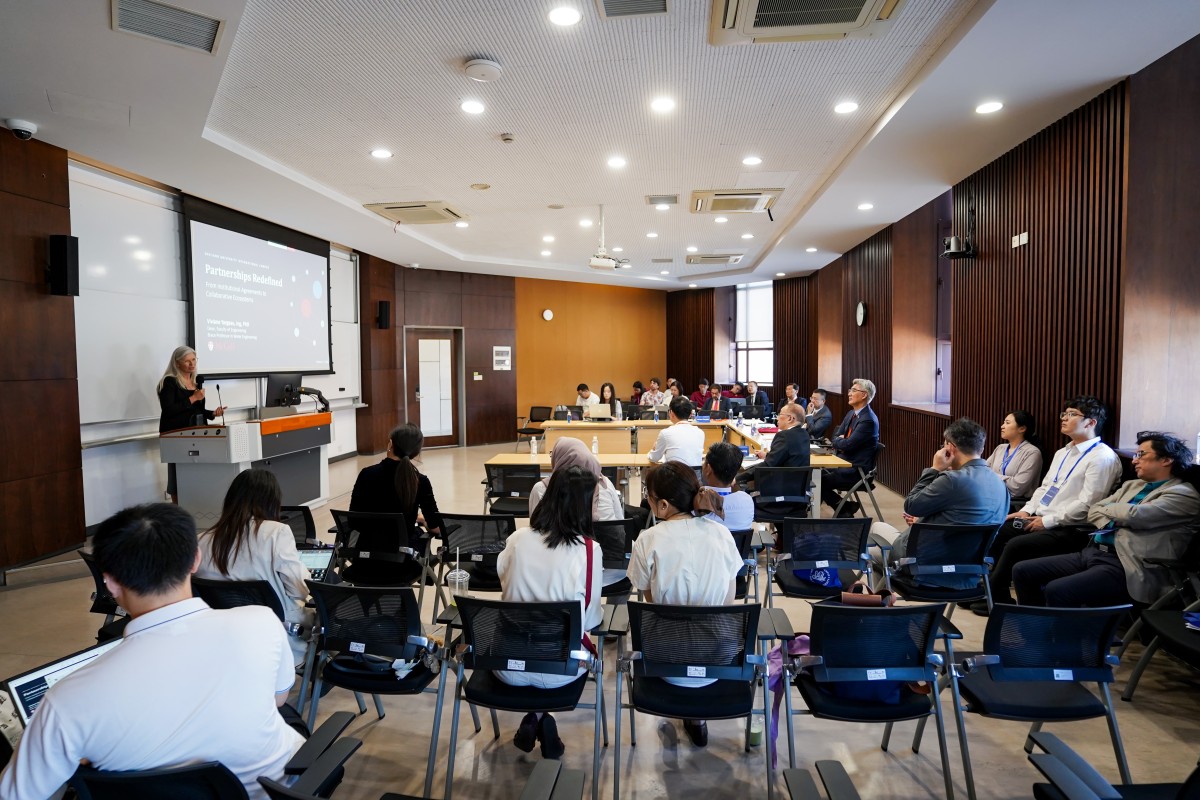
The second, “Internationalization at Home (IaH) Reimagined: The Role of Transnational Education Campuses in Building Nation‘s Global Competence,” examined how internationalization could benefit a broader range of students, including those who do not study abroad, through curricula and campus life.

The third, “Future-Ready Talent: Cultivating Human Agency in an Age of AI-Driven World,” explored how universities could preserve the core elements of education in an AI-driven era, including teacher guidance, the development of sound judgment, and meaningful human interaction.
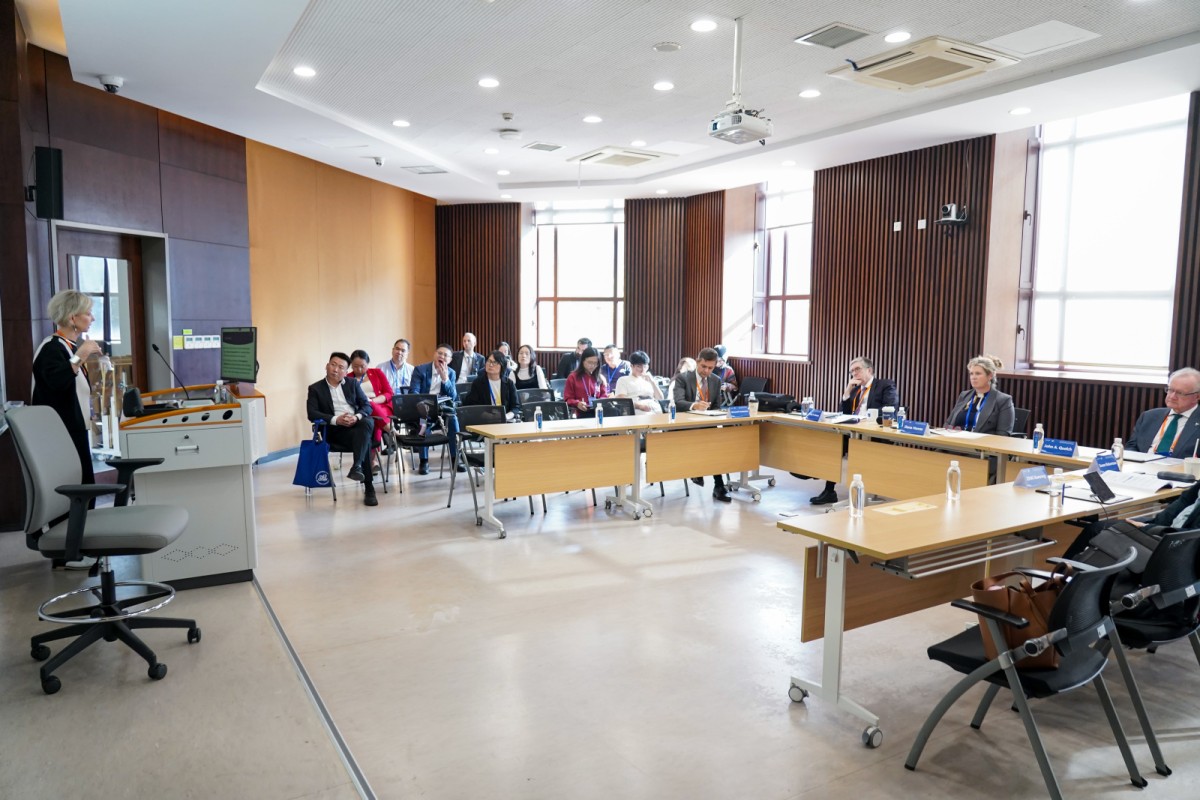
At the closing ceremony, a German participant shared insights and practical experience in transnational education educational cooperation from a German perspective. He emphasized that such cooperation should be grounded in quality partnerships and strengthened through the joint development of programs, two-way mobility and meaningful interaction. These efforts, he noted, could foster mutual understanding and trust, build resilience in responding collectively to uncertainty, and create more inclusive international learning opportunities for students.
The forum also released the Haining Action Framework: Toward a More Sustainable Future for Transnational Education. The framework calls on partners to put student development at the center of their efforts, build cooperation on quality and mutual trust, and work together to create a more open, reciprocal, inclusive and resilient international education system.

The forum brought together representatives from relevant departments and units of Zhejiang University and Haining, as well as university leaders from institutions including the University of Cambridge, the University of Edinburgh, the University of Illinois Urbana-Champaign, McGill University, the University of Western Australia, the University of Barcelona, Ghent University, the University of Macau, Mahidol University, the University of Turin, Hiroshima University, Ghent University Global Campus, the German University of Technology in Oman, Southeast University, Central South University, Dalian University of Technology, Zhejiang Normal University, New York University Shanghai, Duke Kunshan University and Wenzhou-Kean University. Representatives of organizations including the German Academic Exchange Service (DAAD), the Knowledge and Human Development Authority (KHDA) in Dubai, and iFLYTEK also attended, alongside distinguished scholars and other participants.
(Translation: Xue Qian; Text: Li Panyan; Editor-in-Chief: LI Yinan; Reviewer: YANG Yi; Final Reviewer: QU Haidong)